
Why is the US targeting China’s oil trade with Iran right now?
The United States has officially unveiled an expansion of sanctions designed to completely sever Iran's economic ties to the outside world. This move comes amid the ongoing US-Israel war on Iran, with Washington looking to use economic pressure as a primary tool to drain Tehran’s revenue. Treasury Secretary Scott Bessent has issued a stern warning to the international community: countries must choose between doing business with Iran or maintaining access to the dollar-based financial system. Because China has consistently been the largest buyer of Iranian oil for several years, it has become the central focus of these enforcement efforts.
How much oil does China actually buy from Iran?
Despite the geopolitical tension, China’s appetite for Iranian crude remained resilient during the early stages of the recent conflict. Ship-tracking data from Kpler indicates that in February 2026, Beijing was importing approximately 1.57 million barrels per day. While this slipped slightly to 1.47 million barrels in March, the flow was largely consistent. However, the situation changed dramatically in mid-July when the US renewed its blockade of Iranian ports and ships after a temporary truce broke down. By June 2026, shipments had plummeted to 785,000 barrels a day—the lowest level in over three years—and provisional data for August shows a further decline to just 534,000 barrels per day.
Who are the "teapot" refineries fueling this trade?
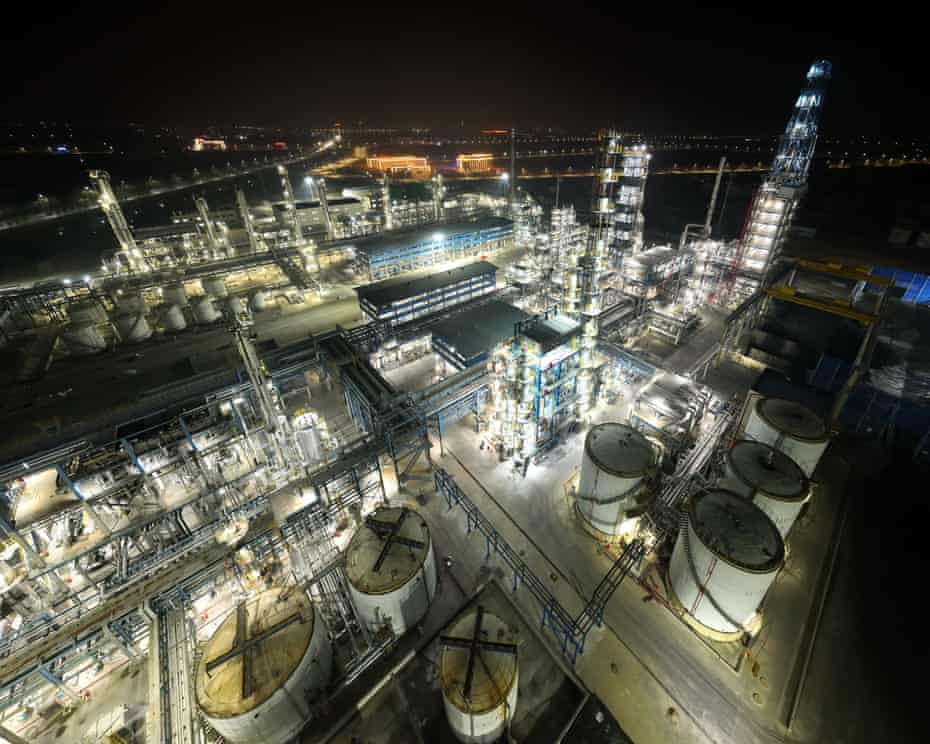
A unique segment of the Chinese energy sector known as "teapot" refineries is responsible for much of this trade. These are small, independent refiners located primarily in provinces like Shandong. They are attracted to Iranian crude because it is typically offered at a steep discount compared to mainstream global benchmarks. These refineries survive by sourcing cheap oil wherever possible and processing it into petrol and diesel for local consumption. Because these entities are often smaller and less connected to the global financial system than state-owned giants, they have historically been harder for US sanctions to reach effectively.
Can US sanctions truly stop these oil flows?
Washington has intensified its efforts to disrupt the supply chain by sanctioning smaller refiners and shipping firms. Recently, the US Treasury targeted larger entities, such as the Hengli Petrochemical (Dalian) refinery, accusing it of purchasing billions of dollars in Iranian oil—a claim the company denies. While the US has warned major Chinese banks that they could face secondary sanctions if they facilitate Iranian transactions, it has so far stopped short of fully designating these massive financial institutions. History suggests that sanctions alone often do little to slow the overall flow, but the combination of financial penalties and the current physical military blockade of ports has proven much more disruptive.
What are the risks of Chinese retaliation?
The Biden-Trump administration remains wary that aggressive sanctions on Chinese banks could backfire. China has already signaled that it will take necessary steps to protect its national interests and rejects what it calls "unilateral sanctions". There is significant concern in Washington that Beijing could retaliate by curbing exports of critical minerals, which are vital for modern technology and manufacturing. This tension is coming to a head as President Trump and Chinese leader Xi Jinping are expected to meet for talks next month, making the timing of these economic moves particularly sensitive.
How are Iran and China responding to the pressure?
The rhetoric from both Tehran and Beijing remains defiant. Iranian Economy Minister Ali Madanizadeh stated that neither China nor Russia has accepted the US measures, describing the sanctions as an "economic terrorist attack". He suggested that Iran has its own tools to "play the game" and resist the pressure. Meanwhile, the Chinese foreign ministry has maintained that pressure tactics are counterproductive and has called for a diplomatic resolution to the conflict.
Syed Naeem Abbas (Author , Marketing Team) — wrote / author this story.
Syed Aqeel (Founder, CEO, and Developer) — verified this story.
Comments(0
No comments yet. Be the first!