
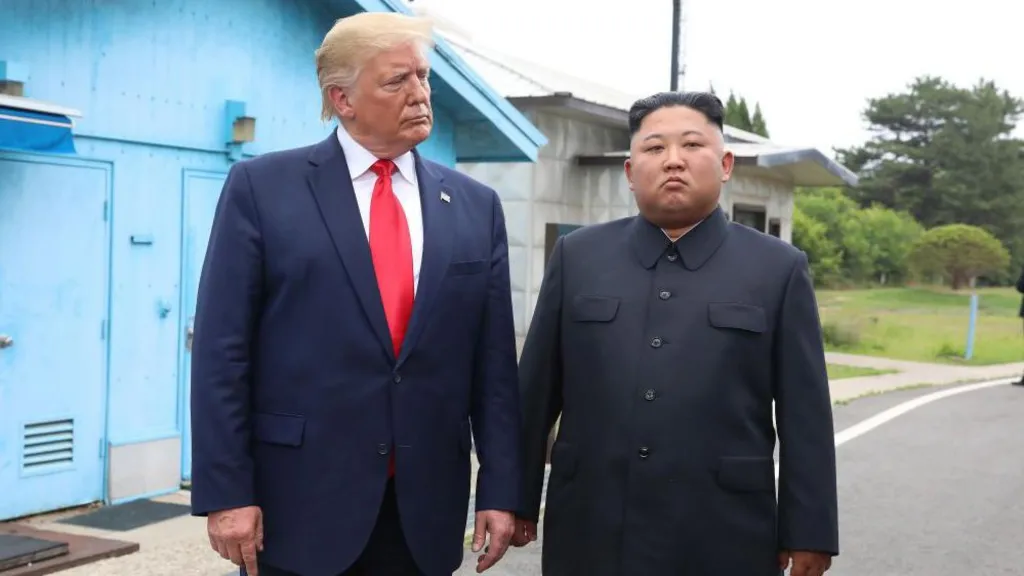
In a move that has caught both domestic military officials and international allies by surprise, President Donald Trump has ordered a "substantial reduction" in the joint military exercises between the United States and South Korea. These drills, known as Ulchi Freedom Shield, are a cornerstone of the decades-long alliance between Washington and Seoul, designed to maintain readiness against potential aggression from the North.
The Logic Behind the Cuts
The President's announcement, made via Truth Social, highlighted several key motivations for the sudden shift in policy. Chief among them is Trump’s belief in his personal rapport with North Korean leader Kim Jong Un. Trump asserted that his relationship with the dictator remains "very good" and argued that conducting large-scale war games sends a "totally inappropriate and hostile" signal to a regime that he views as having been "unthreatening and respectful" during his tenure.
Beyond diplomacy, the President raised significant concerns regarding the financial burden of these operations. He described the exercises as "costly," noting that the United States often carries the majority of the financial weight for such maneuvers. Furthermore, Trump linked the decision to South Korea’s refusal to assist in the "denuclearization of the Islamic Republic of Iran," a point he emphasized as a factor in his current dissatisfaction with the alliance's logistical balance.
A Critical Juncture for Regional Security
The timing of these cuts is particularly sensitive. Military officials from both the U.S. and South Korea have been sounding alarms about the North's rapidly advancing battlefield capabilities. According to recent intelligence and briefings from military leaders, North Korean troops have been gaining invaluable "contemporary battlefield experience" by participating in the war in Ukraine alongside Russian forces.
Colonel Ryan Donald, a spokesperson for the U.S. commands in South Korea, noted that this year’s training scenarios were specifically updated to include lessons learned from the Ukraine conflict, such as countering drone tactics, GPS disruption, and cyberattacks. There are concerns that North Korean soldiers returning from the front lines in Europe are bringing back new tactics that significantly change the regime's military potential.
Expert Warnings and Diplomatic Fallout
While the President views the scaling back as a diplomatic olive branch, many experts in the field are skeptical of the long-term benefits. Leif-Eric Easley, a professor at Ewha Womans University, warned that downsizing the drills would "slow the process of South Korea taking on greater responsibility for its own defense" and ultimately weaken the deterrence that prevents major conflicts in Asia.
The financial argument is also being scrutinized. Easley argued that the actual "cost savings from downsizing drills are marginal," whereas the diplomatic benefits—specifically whether this will actually bring Kim Jong Un back to the negotiating table—remain highly doubtful. In the days leading up to this announcement, North Korea even test-fired ballistic missiles as a form of protest against the drills, suggesting that scaling them back may not immediately de-escalate tensions.
The South Korean Perspective
In Seoul, the presidential Blue House has responded cautiously, stating that they are reviewing the President's posts while remaining hopeful that a positive relationship between the two leaders could lead to meaningful peace talks. However, there is a palpable sense of unease regarding the future of the alliance. Some analysts, like Cheong Seong-chang of the Sejong Institute, suggest that South Korea may eventually need to consider securing its own nuclear deterrent if U.S. security guarantees continue to fluctuate based on executive decisions.
Despite the "substantial reduction," the South Korean government has emphasized that the allies will continue coordinating on their combined defense posture, even if the physical scale of the exercises is diminished for the current cycle.
Historical Precedent and What Lies Ahead
This is not the first time Trump has altered military exercises in the region. Following his 2018 summit with Kim Jong Un, he suspended major drills to facilitate denuclearization talks. While those drills eventually resumed in modified forms, the current order suggests a return to a "diplomacy-first" approach that prioritizes personal leader-to-leader interaction over traditional military readiness programs.
As the reduced exercises proceed through August 27, the world will be watching closely to see if Pyongyang reciprocates this gesture or if the reduction merely leaves the alliance more vulnerable during a period of heightened North Korean military activity.
Source : BBC
Comments(0
No comments yet. Be the first!