
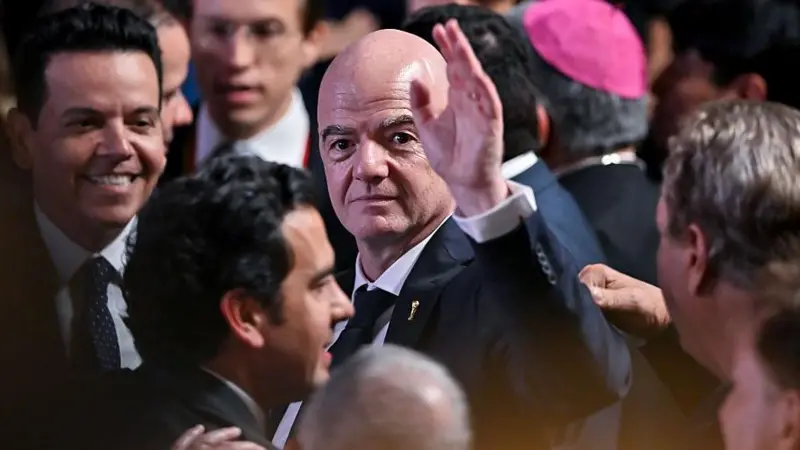
The future of Gianni Infantino’s leadership at FIFA has been thrown into serious doubt as the Scottish Football Association (SFA) officially declared it will no longer support his presidency. Speaking as he introduced a new head coach for the national team, SFA Chief Executive Ian Maxwell confirmed that the governing body has lost confidence in the current FIFA administration and will not vote for Infantino's re-election in early 2027. This move places Scotland firmly in the camp of a powerful opposition led by UEFA, which has already seen the Football Associations of England, Wales, and the Republic of Ireland withdraw their backing.
The catalyst for this "presidency storm" is the fallout from a proposal known as Fifa Forward Enterprise (FFE). The plan, which was later abandoned following intense backlash, involved creating a new commercial entity to manage the ticketing and lucrative commercial rights for all FIFA competitions, including the men's and women's World Cups. Most controversially, Infantino sought to sell a 21% stake in this new venture to a private investment firm. Critics and major confederations viewed this as a dangerous step toward privatizing the game's core assets, leading to widespread accusations of "deception" and a breakdown in trust.
The resistance is not just coming from individual nations. In a blistering open letter, UEFA, Concacaf, and the Asian Football Confederation accused FIFA’s leadership of a "profound lack of judgement". While Infantino was not explicitly named in the letter, sources indicate the message was intended as a clear signal for the president to consider resigning with his "dignity" intact. The three regional bodies emphasized that the controversy surrounding FFE is a fundamental issue regarding the integrity of the game and those elected to lead it.
Despite this mounting pressure, the football world remains deeply divided. While European and several Asian and North American nations have turned against him, Infantino still enjoys support from the confederations of Africa, South America, and Oceania. However, even within these blocs, the consensus is fracturing; New Zealand, for example, has broken ranks with the rest of Oceania to oppose him. Similarly, nations like Mexico and several Asian countries have split from their regional confederations to continue supporting Infantino’s cause.
As the November 18 deadline for presidential candidates approaches, no challenger has yet stepped forward to officially oppose Infantino. However, the political landscape is increasingly volatile. If Infantino remains in power, there are already reports of preliminary discussions between major confederations regarding the possibility of breakaway competitions, a move that could permanently alter the structure of international football. With a critical FIFA Council meeting scheduled for October, the pressure on Infantino is only expected to intensify.
Comments(0
No comments yet. Be the first!