
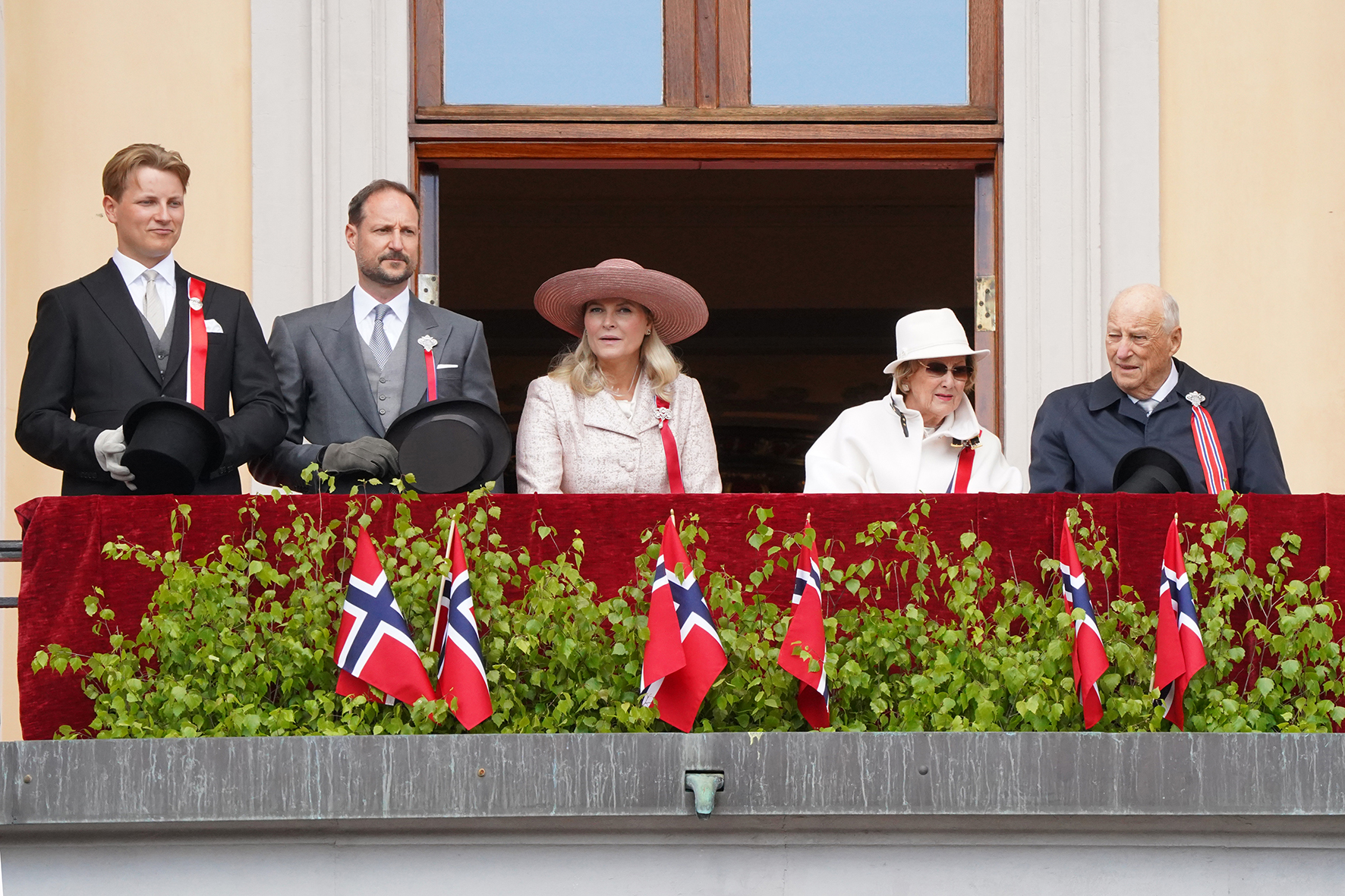
King Harald V of Norway, Europe’s oldest monarch and the man who spent 35 years making a ceremonial crown feel ordinary, died in the early hours of Friday 28 August 2026. The royal palace in Oslo said he died peacefully at 06:35 local time — 05:35 BST, 04:35 GMT — at Oslo University Hospital. He was 89. His son became King Haakon VIII the moment Harald’s heart stopped. Princess Ingrid Alexandra, Haakon’s eldest child, is now heir to the throne.
The palace confirmed that members of the family had been at his bedside through the previous day and night. Flags across Norway were lowered to half-mast. Church bells were due to ring at midday. Later on Friday, Haakon was to hold an extraordinary council of state with the government, the first formal act of a reign that began under mourning — and under a pressure his father never had to carry when he took the oath in 1991.
Who has died, and what has Norway confirmed this morning?
Harald had been in hospital since 17 August. The palace said he was being treated after complications of haemolytic anaemia, a condition in which red blood cells break down too quickly, and for a bacterial infection in his bloodstream. Reuters, reporting from Oslo, said he had been admitted for that blood infection. The BBC and The Guardian, drawing on earlier palace statements, noted the anaemia diagnosis and the cortisone treatment that preceded the hospital stay. On Thursday the court described his condition as extremely serious. By Friday morning the king was gone.
Associated Press, writing from Stavanger, said the palace placed the death at the National Hospital in Oslo, the Rikshospitalet campus of Oslo University Hospital. Reuters, the BBC and The Guardian used the university hospital name that the palace itself put on its website. There is no contradiction in the buildings — only in how outlets labelled them.
Prime Minister Jonas Gahr Støre, in a statement carried by AP and The Guardian, said a whole nation was in mourning, and that Norwegians were left with “a deep sense of gratitude for a long life in the service of Norway.” For more than three decades, Støre added, Harald had shown “an unwavering faith in the Norwegian people” and had helped the country “see the best in ourselves — and in one another.”
That is the register in which most Norwegians will remember him: not as a ruler who commanded, but as a head of state who showed up. Real power in a democracy of about 5.5 million people sits with an elected parliament. The king’s work was symbolic, pastoral, and, when it mattered, moral.
Who was King Harald V?
He was born on 21 February 1937 at the Skaugum estate in Asker, near Oslo, the son of the future King Olav V and Crown Princess Märtha of Sweden. Reuters noted that the birth itself was treated as a national event: he was the first royal heir born on Norwegian soil in almost 570 years. AP put the same landmark in royal terms — the first Norwegian prince born in the country since King Olav IV in 1370. For centuries Denmark and then Sweden had supplied the crowns. Harald’s grandfather, Haakon VII, had been elected king only in 1905, when the union with Sweden was dissolved. The boy born at Skaugum was living proof that Norway had a royal house of its own again.
He came to the throne in January 1991 after Olav died, and he took the same motto his father and grandfather had used: “All for Norway.” He reigned through the oil-and-gas boom that made the country rich, through the shock of the 22 July 2011 attacks, and through a long, stubborn old age in which other European monarchs stepped aside and he would not.
He was a sailor of genuine standard, not a weekend hobbyist in borrowed oilskins. Like Olav, an Olympic champion in 1928, Harald competed for Norway — The Guardian lists the Tokyo, Mexico City and Munich Games — and in 1987 he skippered his yacht to a world championship gold. Reuters recorded that he never matched his father’s Olympic medal. He did not pretend otherwise. Late in life he was still the king who drove himself to informal events, who put on rubber boots after floods, and who, at 76, slept in a hammock in the Amazon with the Yanomami, a trip Reuters said he had wanted for years.
He is survived by Queen Sonja, his wife of almost 58 years; their daughter, Princess Märtha Louise; their son, now King Haakon; and, the BBC reported, six grandchildren.
How did a wartime child exile become a modern king?
Harald was three when Nazi Germany invaded Norway in April 1940. To keep the succession out of German hands, his mother fled with him and his older sisters, Ragnhild and Astrid, first into Sweden and then by sea to the United States. His father and grandfather went to Britain with the government-in-exile. Haakon VII’s refusal to rubber-stamp German demands became a founding story of modern Norway; the small boy in America was the other half of that story.
Reuters reported that after a brief stay at the White House the family lived for five years in Bethesda, Maryland, and saw President Franklin D. Roosevelt often enough that Harald later described him as like a grandfather. AP noted that at six he carried out his first official duty, christening warplanes at a Norwegian air base in Canada. The family came home in June 1945.
The choice of schools after the war was a quiet political act. Harald went to state schools rather than the private tutoring his father had received, then to the Norwegian military academy and, from 1960 to 1962, to Balliol College, Oxford, where the BBC said he read social science, history and economics. He became crown prince in 1957. He served as regent when Olav fell ill in 1990. Nothing in that résumé is exotic. That was the point.
The historian Trond Norén Isaksen told the BBC that Harald only really came into his own around 2000, growing from a reserved, serious, shy man into someone more open. Royal correspondents speaking to the BBC reached for homely titles: a grandfather of the nation, the “People’s king,” a phrase also used of Olav. Tove Taalesen of Nettavisen called him “one of us.” Caroline Vagle of Se og Hør said he had “always been very close to the people.”
The two speeches that will be replayed this weekend sit a decade apart. After Anders Behring Breivik killed 77 people in Oslo and on Utøya in July 2011, Harald addressed the country on television and, weeks later, spoke at a memorial with his voice breaking. AP quoted him saying he remained convinced “that the belief in freedom is stronger than fear,” and that he still believed in “an open Norwegian democracy and society.” The BBC recorded another line from that period: “I can only imagine the depth of your pain. As King of this nation, I feel for each and every one of you.” The Guardian’s version of the same hour has him speaking as “a father, grandfather and spouse.” Ole-Jørgen Schulsrud-Hansen, a historian and TV2 royal correspondent, told the BBC the moment had been “burned into our minds of what a monarchy should be.”
In 2016 he gave a different kind of speech, the one that travelled furthest online. Norwegians, he said, came from Afghanistan, Pakistan, Poland, Sweden, Somalia and Syria; they believed in God, Allah, the universe and nothing; they were “girls who love girls, boys who love boys, and girls and boys who love each other.” Reuters, AP, the BBC and The Guardian all returned to those words on Friday. They are the shortest way to explain what “moderniser” meant in his mouth: not a rebrand, but a public insistence that the country already belonged to more people than the palace portrait gallery suggested.
Why did marrying Sonja change the monarchy — and why would he not abdicate?
As a young man he was expected to pick a bride from Europe’s remaining princesses. He would not. For nine years he held out for Sonja Haraldsen, the daughter of a businessman, whom he had met as a student. King Olav feared a commoner queen would weaken a monarchy that was still young. Harald, the BBC reported, told his father that if he could not marry her he would not marry at all. Olav gave way. They wed in Oslo Cathedral on 29 August 1968. Norwegians, AP wrote, greeted the wedding with jubilation and later took Sonja as their queen. The couple had two children, Märtha Louise and Haakon.
That marriage did more than settle a love story. It licensed the next generation to marry outside the old catalogue as well. Haakon married Mette-Marit Tjessem Høiby in 2001. Märtha Louise’s first husband was the writer Ari Behn. Vagle told the BBC that Harald’s choice “helped bring an end to a very male-dominated Royal Family.” He was, she said, never afraid to show emotion, humour or vulnerability.
Openness had a cost, and he knew it. In a Reuters interview after a 2005 independence centenary ball, he warned Europe’s royal houses against slamming the gates they had already opened. “If you’ve opened the gate it’s very difficult to close it again,” he said. “I’m not sure I’d want to close it.”
Abdication was the one modern fashion he refused. Denmark’s Queen Margrethe II, his second cousin, stepped down in January 2024. AP reported that Harald answered by standing on the oath he had sworn: “It lasts for life.” That same year, Reuters said, he cut his official diary but still ruled out stepping aside. In an earlier Reuters interview he had joked that he would stay unless he went “completely bonkers.” Sonja, sitting with him, laughed and asked who would ever tell him.
His body was less loyal than his oath. He had a pacemaker fitted in 2024 after being hospitalised on holiday in Malaysia, Reuters reported, and was flown home by the Norwegian armed forces. In February 2026 he was treated on Tenerife; AP described a skin infection, The Guardian an infection and dehydration. In April 2024 he made a permanent cut to public engagements. He still would not go. The last illness began in August with the anaemia treatment, the fluid retention, the infection, the days in Rikshospitalet, and then the Thursday bulletin that told the country to prepare.
Who is King Haakon VIII, and what happens in Oslo today?
Haakon is 53. He became king at the instant of his father’s death; Norway has no vacancy on the throne. Reuters, in a factbox on the transition, said the new king must formally tell the government that Harald has died, at an extraordinary council of state — a meeting of the full cabinet with the monarch. There he names the style he will use and the motto he will take. He may change his given name. Every major outlet on Friday treated King Haakon VIII as the working title. He may keep the family motto, “Alt for Norge” — Everything for Norway — or choose his own.
A few days later, Reuters said, he will take an oath in the Storting, promising to govern in accordance with the constitution and the law. There will be no coronation. If he wants the older blessing, a consecration can follow at Nidaros Cathedral in Trondheim, with the crown on display but not worn, and then a tour of the country. Funeral plans were not complete in Friday morning’s dispatches. Reuters said Harald is expected to lie in Oslo Cathedral and to be buried in the royal mausoleum at Akershus Fortress, beside Haakon VII, Queen Maud, Olav V and Crown Princess Märtha.
The new king is already known to the country. He has been regent during his father’s illnesses, including this last one. Reuters, in a companion profile published on Friday, described a prince who had long struggled to reconcile a private temperament with a public role. In 2001 he married Mette-Marit, then a single mother, in a match that caused a storm and that King Harald and Queen Sonja publicly backed. They have two children, Ingrid Alexandra and Prince Sverre Magnus.
Who is next in line after King Haakon?
Princess Ingrid Alexandra is now the heir. Associated Press, in a companion piece, said Haakon’s eldest child becomes Crown Princess and first in line. That is the delayed fruit of a 1990 constitutional change. Norway moved to equal primogeniture so that the first-born would inherit regardless of sex — but the change was not applied retroactively. Haakon, though younger than his sister Märtha Louise, remained heir ahead of her. His own eldest child does not face that bar. A young woman now stands where, for most of the last century, only men stood.
The line after her runs through her brother and then through the wider family. The practical point for Friday is simpler. For the first time since 1905, Norway has a king who is not Harald or Olav or the elected Haakon VII, and a daughter of the new king who will, if the constitution holds, be queen in her own right.
Why does the new reign begin under pressure?
It would be dishonest to pretend this is only a story about a beloved grandfather-king. Public support for the monarchy has slipped this year, and that pressure sits on the household Haakon brings with him as king and on Mette-Marit as the new queen consort. Reuters cited a Norstat poll for NRK that put support at 60 per cent in February 2026, down from 70 per cent a month earlier, recovering a little to 64 per cent in May. In the same February survey Harald himself still scored 9.2 out of 10 as the royal who best represented the family. The BBC and The Guardian cited a steeper Aftenposten reading, from 72 per cent in 2024 to 54 per cent. The numbers differ. The direction does not. Controversies around the new queen consort have weighed on those figures. They are not the measure of Harald’s life. They are the weather in which Haakon must now reign. Caroline Vagle told the BBC that when things went wrong, people tended to blame anyone but the late king. That protection does not transfer automatically.
How is Norway — and Europe’s royal houses — marking the death?
In Oslo, flowers were already at Palace Square before the death bulletin, laid while Harald was still described as extremely ill. AP published photographs of the royal flag at half-mast and of small Norwegian flags among the bouquets. The BBC said crowds had kept coming in the last 24 hours as relatives visited the hospital.
From London, King Charles III sent what the BBC called his “most heartfelt condolences.” The Guardian reported a fuller tribute in which Charles mourned a “dear cousin,” a “towering figure” who had guided his country with “warmth and humility” and served it with “unwavering dedication.” From Stockholm, King Carl XVI Gustaf remembered, in a statement carried by both the BBC and The Guardian, “a good friend to me, my family and to Sweden,” and wished “success and good fortune” to his godson Haakon.
Those messages will be followed by days of formal mourning, a funeral still being arranged, and the quieter work of a new king learning the difference between deputising and occupying the chair. Harald spent a lifetime arguing that a monarchy could stay open, stay human, and still last. The test of that argument now belongs to Haakon VIII, to the new queen consort, and to a Crown Princess whose public life is only beginning. The old king would probably have said that was as it should be. He had done his shift.
Hero photograph: King Harald V, far right, on the Royal Palace balcony in Oslo on Constitution Day, 17 May 2026. Credit: Vadim Chuprina / Wikimedia Commons.
Written by Syed Aqeel. Verified by Syed Aqeel.
Comments(0
No comments yet. Be the first!