
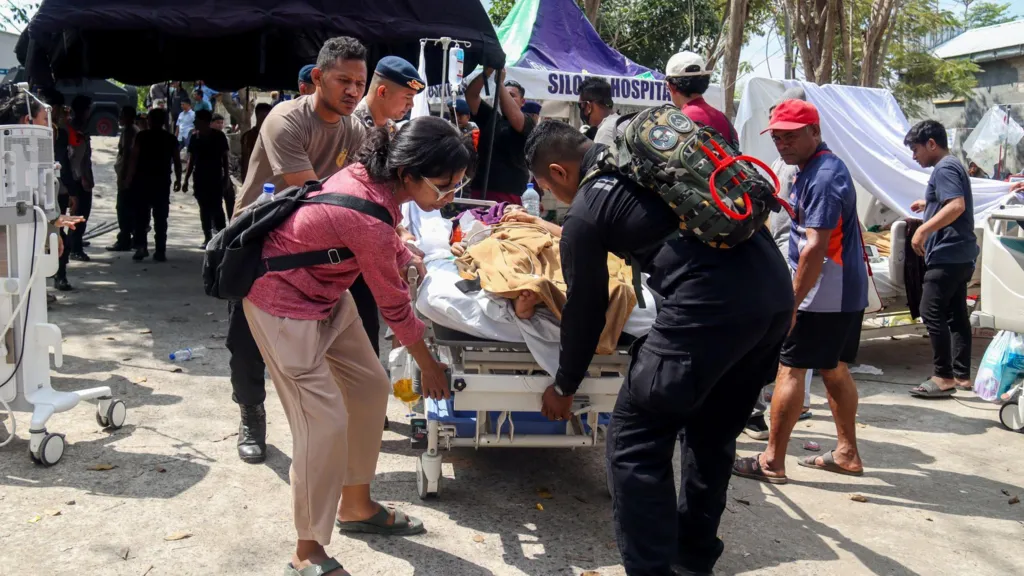
While the capital city of Jakarta was draped in red and white for Indonesia’s 81st Independence Day, a much darker reality was unfolding 1,500 kilometers to the east. In the province of East Nusa Tenggara, the sounds of celebration were replaced by the whirring of rescue helicopters and the desperate search for survivors following a catastrophic 7.7 magnitude earthquake. What should have been a day of national pride has instead become one of the deadliest disasters the archipelago has faced in years.
A Saturday Morning That Changed Everything
The initial tremor struck on Saturday morning at a shallow depth of just 10 kilometers. The sheer power of the 7.7 magnitude quake sent residents of Flores and surrounding islands into a state of absolute panic. While initial tsunami warnings were eventually lifted, the physical damage was already done. Landslides triggered by the shaking blocked critical roadways in regions like Sikka and Manggarai, effectively cutting off entire villages from immediate help. As of Monday, the official death toll has climbed to at least 55 people, with dozens more injured and thousands forced into makeshift shelters.
The Relentless Ground: 1,600 Aftershocks
The nightmare for survivors did not end with the first quake. The region has been plagued by a relentless series of aftershocks—nearly 1,600 recorded as of Monday morning. A significant 5.6 magnitude tremor rattled the Nagekeo region on Monday, serving as a terrifying reminder that the earth has not yet settled.
For residents like Firmus Woge, a 64-year-old farmer, the constant shaking is physically debilitating. Being treated for asthma in a makeshift clinic, Woge described how his breathing difficulties worsened each time a new tremor rattled the hospital beds. "I felt better last night," he said while gasping for breath, "but it’s getting worse again after this morning’s quake".
Search, Rescue, and the Struggle for Aid
Fathur Rahman, the rescue chief in Maumere, has confirmed that the current priority is aerial monitoring and extrication. Teams are using helicopters to survey the widespread devastation, which includes roughly 1,300 damaged homes across the province. On Flores alone, nearly 250 houses were completely destroyed.
Despite the deployment of 3,500 military and police personnel and 275 tons of aid, the logistics of reaching isolated areas remain a "near-death journey". On Palue Island, one of the areas closest to the epicenter, rescuers had to navigate steep terrain and landslide-blocked roads to deliver emergency supplies. For those in the tents, the needs are basic but urgent: clean water, medicine, and food. In some camps, children are already contracting diarrhea due to a lack of sanitation.
A Nation Divided Between Joy and Grief
In Jakarta, President Prabowo Subianto led a moment of silence during the official independence ceremonies, asking the nation to pray for the victims in East Nusa Tenggara. But for those in the disaster zone, the concept of a holiday has vanished. Gervas, a 42-year-old resident who fled his village for higher ground fearing a tsunami, echoed the sentiment of many survivors. When asked about the Independence Day festivities, he replied simply, "I don't think about that anymore... I just think about the safety of my wife and 4-year-old twins".
As Indonesia continues to grapple with its location on the volatile "Ring of Fire," the resilience of its people is being tested once again. The search for the missing continues, even as the nation reflects on a holiday overshadowed by the raw power of nature.
Source : GeoNews
Comments(0
No comments yet. Be the first!