
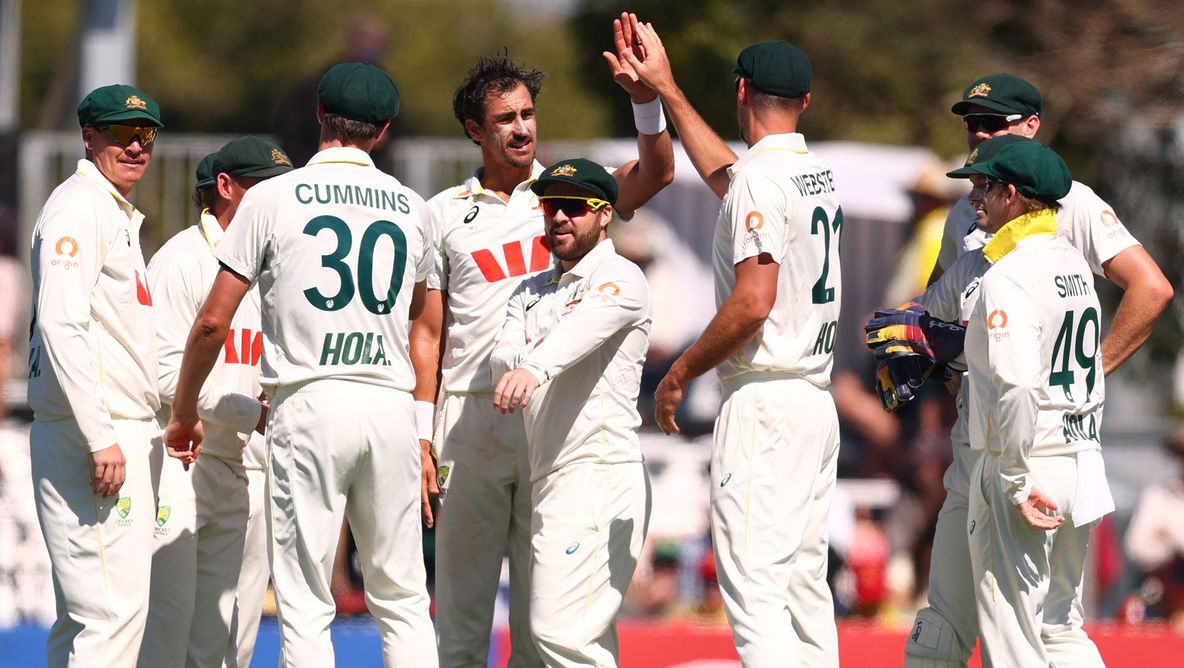
The world of Test cricket is often celebrated for its slow-burn drama and strategic endurance, but the recent encounter between Australia and Bangladesh in Mackay turned that narrative on its head. In a stunning display of pace and clinical execution, the match reached its conclusion in just two days, leaving fans and historians scrambling to update the record books. It was a game defined by the sheer dominance of the ball over the bat, resulting in one of the most lopsided yet statistically fascinating matches in recent memory.
Why was the Mackay Test between Australia and Bangladesh historic in terms of duration?
The primary reason this match will be remembered for decades is its incredible brevity. The entire Test lasted only 750 balls, making it the second-shortest Test match ever played on Australian soil. The only match in Australia to feature fewer deliveries was the 1931/32 clash between Australia and South Africa at the MCG, which lasted just 656 balls. On a global scale, the Mackay Test ranks as the fourth-shortest completed match in the history of cricket. It sits behind the 642-ball encounter between South Africa and India in Cape Town (2024), the aforementioned MCG Test, and a 672-ball match between the West Indies and England in Bridgetown in 1935. The fact that this was one of five Tests completed within two days in Australia—four of which have occurred in just the last five seasons—suggests a growing trend of fast-paced, high-intensity cricket in the region.
How did Mitchell Starc dominate the record books during this match?
Mitchell Starc was the undisputed protagonist of the Australian bowling attack, utilizing the new ball with lethal precision. He achieved a monumental feat by picking up a wicket on the very first ball of the match, marking the fourth time in his career he has done so. This achievement allowed him to surpass Pedro Collins for the most first-ball wickets in Test history. Starc’s efficiency was further highlighted by his first-innings performance, where he secured a five-wicket haul in just 22 balls—the sixth-fastest five-for on record. In fact, Starc holds the record for the fastest-ever five-wicket haul, which he achieved in just 15 balls against the West Indies the previous year. By the end of the Mackay Test, Starc had claimed a 10-wicket match haul in only 20 overs, giving him a strike rate of 12 balls per wicket—the best recorded in a 10-wicket haul since 1913. His four 10-wicket hauls now place him second only to the legendary Wasim Akram for the most such hauls by a left-arm seamer.
What went wrong for Bangladesh’s batting lineup in both innings?
Bangladesh found themselves completely overwhelmed by the Australian conditions and the relentless pace of Mitchell Starc. The visitors were bowled out for a meager 64 in their first innings and followed it up with 95 in the second. This marked only the fourth time since 1960 that a team has been dismissed for under 100 runs in both innings of a single Test match. The other instances involved England in 1984, Pakistan in 2002, and Zimbabwe in 2005. Bangladesh’s total match aggregate of 159 runs is now their lowest in history, "surpassing" the 187 runs they managed against the West Indies in 2018. The inability of the top order to weather the initial storm of the new ball proved fatal, as they struggled to find any rhythm against a bowling unit that was operating at the peak of its powers.
What were the standout performances for the Bangladesh team despite the loss?
While the team result was disappointing for the visitors, Shoriful Islam provided a major silver lining with a performance for the ages. He claimed figures of 7/48, which stands as the third-best innings figures ever for a Bangladesh bowler and the absolute best by a Bangladeshi seamer. His achievement surpassed the previous best for a seamer, held by Shahadat Hossain since 2008. Furthermore, Shoriful’s 7/48 was the best return by any visiting fast bowler in Australia since Curtly Ambrose’s legendary 7/25 at the WACA in the 1992/93 season. Shoriful and Mitchell Starc also made history together; they became only the fourth pair of opposing bowlers to each bag six or more wickets on the opening day of a Test match, joining an elite group of cricketers dating back to 1902.
How does Australia’s first-innings total rank among winning scores?
Interestingly, Australia’s victory did not stem from a massive batting total. They were dismissed for just 210 runs in their first innings, which proved to be more than enough for an innings victory. This is the fourth-lowest first-innings total to ever result in an innings win for a team. The last time a team won by an innings after scoring 210 or fewer was in 1946, when Australia defeated New Zealand after declaring at 199/8. The record for the lowest total to result in an innings win remains Australia’s 153 against South Africa in 1932. This statistic underscores how much the Mackay pitch favored the bowlers and how effectively the Australian attack exploited those conditions compared to their counterparts.
Syed Naeem Abbas (Author , Marketing Team) — wrote / author this story.
Syed Aqeel (Founder, CEO, and Developer) — verified this story.
Comments(0
No comments yet. Be the first!